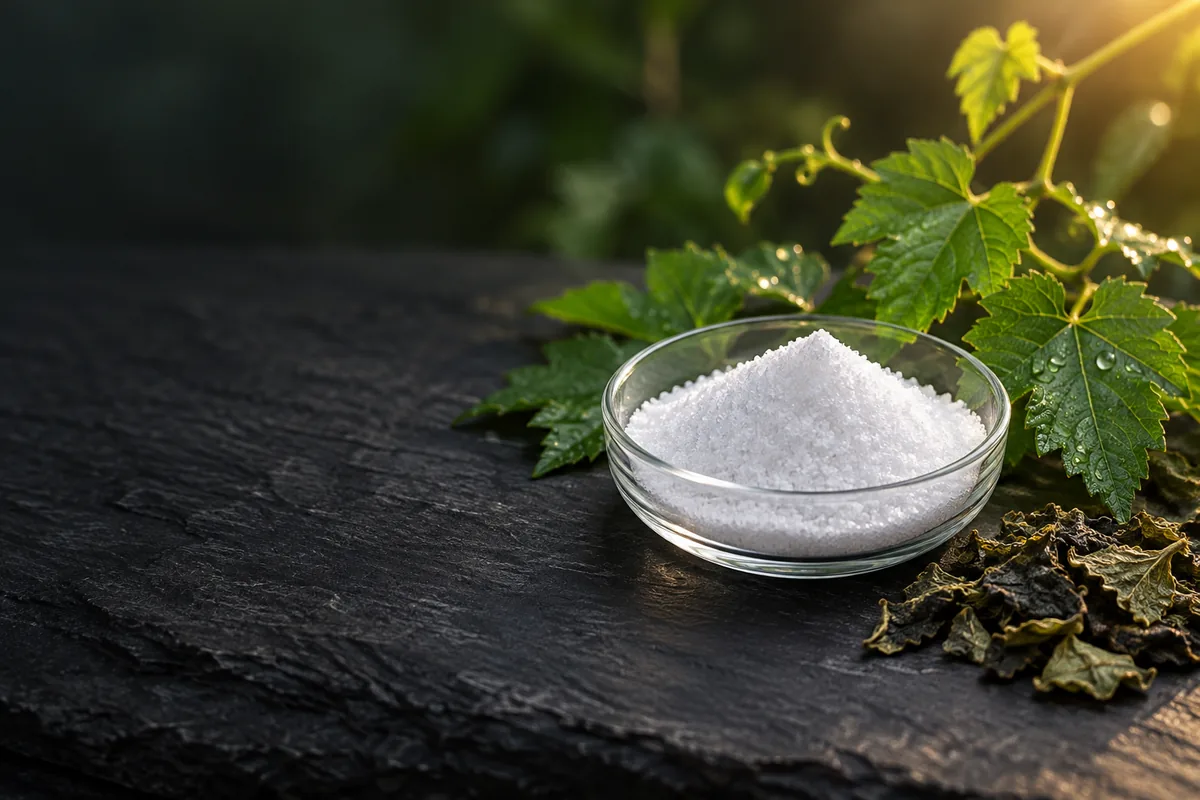
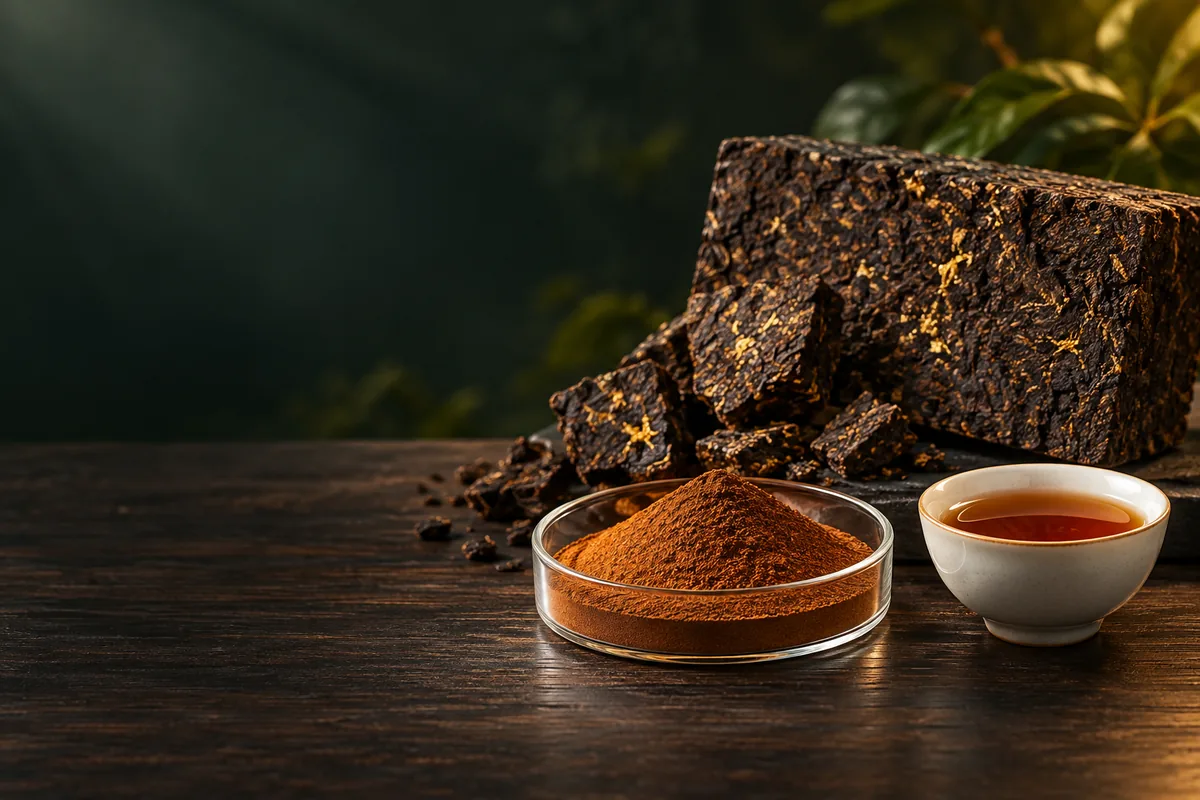
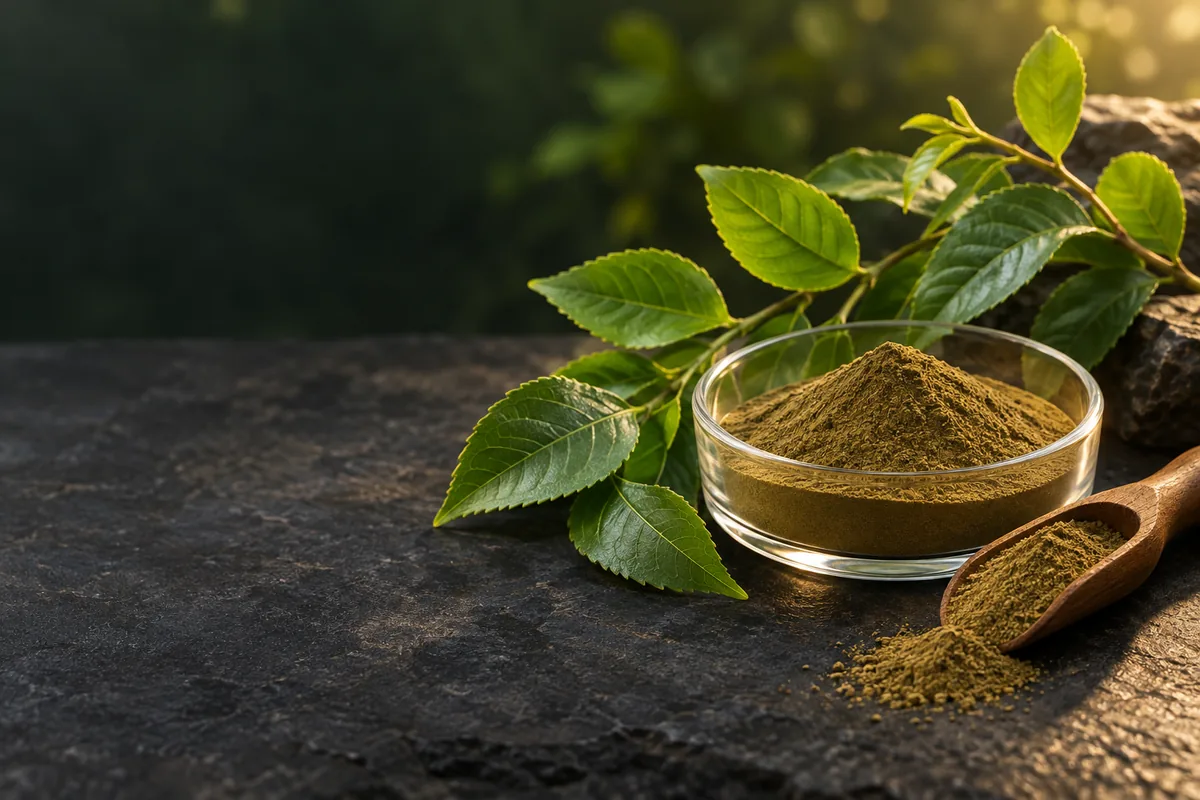
Tianyi Health Tech supplies bulk dihydromyricetin (DHM, also known as DMY or ampelopsin) powder to supplement brands, private-label manufacturers and functional beverage companies. Our 98% DHM (HPLC) is extracted from the young leaves of vine tea (Ampelopsis grossedentata) grown in Hunan, and is supplied with batch COA and OEM/ODM support.
Typical specification (batch COA available on request)
Parameter
Typical specification
Method
Identity
Product name
Dihydromyricetin (DHM)
Synonyms
DMY; ampelopsin; dihydromyricin
CAS No.
27200-12-0
Molecular formula / weight
C15H12O8 / 320.25 g/mol
Botanical source
Ampelopsis grossedentata (vine tea), young leaves
Origin
Hunan, China
Specification
Assay (DHM)
NLT 98%
HPLC
Appearance
White, fine powder
Visual / organoleptic
Loss on drying
NMT 5%
105 °C, 4 h
Ash
NMT 5%
525 °C, 3 h
Particle size
100% pass 80 mesh
Sieve
Residual solvents
≤ 0.5%
GC
Contaminants and microbiology
Heavy metals (total)
≤ 10 mg/kg
AAS
Lead (Pb) / Arsenic (As)
≤ 2.0 / ≤ 1.0 mg/kg
AAS
Mercury (Hg) / Cadmium (Cd)
≤ 1.0 / ≤ 1.0 mg/kg
AAS
Total plate count
≤ 1,000 cfu/g
Pharmacopoeia method
Yeast and mold
≤ 100 cfu/g
Pharmacopoeia method
Salmonella / E. coli
Negative / Negative
Pharmacopoeia method
Aflatoxin B1
≤ 5.0 µg/kg
Pharmacopoeia method
Pesticide residues (BHC, DDT, PCNB / aldrin)
≤ 0.10 / ≤ 0.02 mg/kg
Pharmacopoeia method
Physical and handling data
Bulk / tapped density
About 0.25 g/mL / 0.34 g/mL
Capsule fill
About 0.32 g DHM per size 00# capsule (0.95 mL)
Solubility
Easily soluble in hot water; much lower at room temperature
Stability
Stable in neutral and slightly acidic conditions; avoid temperatures above 100 °C (irreversible oxidation)
Supply
Packaging
1–5 kg: inner sealed bag, outer foil bag, carton. Above 5 kg: inner double PE bag in a paper/fibre drum
Shelf life / storage
2 years in original unopened packaging; ventilated, dry place away from direct sunlight and heat
Documents
Specification sheet, batch COA and technical documents on request
Values are typical specification limits. The batch COA supplied with each order prevails. Looking for a lower-purity total-flavonoid grade? See vine tea extract.
Overview
What Is Dihydromyricetin (DHM)?
Dihydromyricetin (DHM) is a dihydroflavonol found in vine tea, the leaves of Ampelopsis grossedentata. It also appears in the literature as DMY, ampelopsin and dihydromyricin, and is registered under CAS 27200-12-0. Young vine tea leaves are unusually rich in it, with reported contents of up to 20–30%, which is why vine tea is the practical commercial source. To buy the whole-leaf flavonoid extract instead of the purified compound, see our vine tea extract, or compare both grades in our formulator guide: Dihydromyricetin (DHM) vs Vine Tea Extract: Differences, Specifications and Sourcing.
Our DHM is purified by repeated crystallization to a specification of at least 98% by HPLC (detection at 291 nm), giving a white powder that is easy to standardize in capsules, stick packs and powdered drink mixes.
Scientific advisor. Our vine tea program is advised by Dr. Zhang Yousheng, research fellow, author of Vine Tea Science and chief research expert for Zhangjiajie vine tea (mei cha).
Research
Why Brands Formulate With DHM
DHM is one of the most studied vine tea constituents. Published research, mostly preclinical, has examined its antioxidant behavior, its interaction with neurotransmitter receptors, and its role in liver lipid and ethanol metabolism pathways. The references below are provided for R&D reference only. They describe research and are not claims about our product.
Selected references
Shen Y, Lindemeyer AK, Gonzalez C, et al. Dihydromyricetin as a novel anti-alcohol intoxication medication. J Neurosci. 2012;32(1):390–401. doi:10.1523/JNEUROSCI.4639-11.2012. Preclinical study of DHM and GABA-A receptors.
Silva J, Yu X, Moradian R, et al. Dihydromyricetin protects the liver via changes in lipid metabolism and enhanced ethanol metabolism. Alcohol Clin Exp Res. 2020;44(5):1046–1060. doi:10.1111/acer.14326. Preclinical study.
Zhang J, Chen Y, Luo H, et al. Recent update on the pharmacological effects and mechanisms of dihydromyricetin. Front Pharmacol. 2018;9:1204. doi:10.3389/fphar.2018.01204. Review article.
Formulation guide
Formulating With DHM Powder: Solubility, Stability and Capsule Fill
DHM behaves differently from most plant extracts, so a few handling facts save weeks of trial and error. The notes below come from our own physical data and are a starting point for your lab work.
Solubility
DHM is easily soluble in hot water and much less soluble at room temperature. For beverages and liquid concentrates, dissolve in hot water first, then cool and blend into the base. For cold-mix powdered drinks, plan for dispersion rather than full dissolution and test the finished texture.
Stability and pH
DHM is stable under neutral and slightly acidic conditions and has good thermal stability, but above 100 °C it oxidizes irreversibly. Keep processing below boiling and avoid long hot holds. Validate pH, light and shelf-life stability in your own matrix.
Capsule fill
About 0.32 g of DHM fills one size 00# capsule (0.95 mL), so a 300 mg-class serving fits in one capsule without much excipient. Our powder is light (bulk about 0.25 g/mL, tapped about 0.34 g/mL), so check flow and tamping on your filling line.
Stick packs and powder blends
100% of the powder passes 80 mesh, which suits dry blending with sweeteners, acids and flavors.
Dose design. Finished supplements are commonly formulated at around 300 mg per serving. Final dose, labeling and any wording must follow the rules of your target market and your own substantiation. We can share the technical data we hold to support your regulatory review.
Process
How Our DHM Is Made
ExtractionYoung vine tea leaves are extracted to release the flavonoid fraction.
CrystallizationCooling crystallization and filtration separate crude DHM crystals.
RecrystallizationAlcohol precipitation and recrystallization from water raise purity.
Activated carbonActivated carbon treatment and repeated crystallization refine color and purity.
Drying and packingThe crystals are dried, sieved and packed in food-grade bags and drums.
Purification relies on repeated crystallization. Residual solvents are specified at 0.5% or less and tested by GC.
OEM / ODM
OEM/ODM & Custom Solutions
Dose and serving design for capsules, tablets, stick packs, powdered drink mixes and gummies
Private-label and white-label ingredient supply with your own specification requirements
Technical documents for your regulatory review (specification, batch COA, process overview, heavy-metal and microbiology data)
Sample lots for formulation, stability and sensory work before you commit to volume
Why Tianyi
Why Partner With Tianyi
Vine tea expertise
A Hunan vine tea supply base and a scientific advisor who wrote the textbook on vine tea, Vine Tea Science.
Batch-level documentation
Specification sheet and batch COA on request, with HPLC assay, heavy metals, microbiology and residual solvents.
Responsive technical support
A named export contact, replies within 24 hours, and formulation guidance on dissolving and stabilizing DHM.
One source for both grades
Buy DHM 98% here, or the whole-leaf vine tea extract if you need a total-flavonoid profile.
Quality
Quality Control & Certifications
Each batch is tested for DHM assay by HPLC, loss on drying, ash, particle size, residual solvents, heavy metals (AAS), microorganisms, aflatoxin B1 and selected pesticide residues, as listed in the specification above. A batch COA is available on request, and the HPLC chromatogram can be shared with the COA.
Company-level credentials and partner certificates are listed on our Quality & Certifications page.
Yes. Dihydromyricetin (DHM), DMY, ampelopsin and dihydromyricin are names for the same dihydroflavonol (CAS 27200-12-0). Buyers and formulators use them interchangeably; please use whichever term your documentation requires and we will match it on the COA.
What purity of dihydromyricetin do you supply?
Our standard grade is DHM 98% (HPLC), a white fine powder. Assay is specified as not less than 98%. For a lower-purity total-flavonoid grade, see our vine tea extract, or compare specifications and formulations in our DHM vs vine tea extract guide.
How do I dissolve DHM powder in a drink?
DHM is easily soluble in hot water and much less soluble at room temperature, so dissolve it in hot water (below 100 °C) and then cool or blend into your base. DHM is stable in neutral and slightly acidic conditions, but above 100 °C irreversible oxidation occurs, so avoid prolonged boiling. Always validate stability in your own matrix and pH.
How much DHM fits in a capsule?
One size 00# capsule (0.95 mL) holds about 0.32 g of our DHM powder. Bulk density is about 0.25 g/mL and tapped density about 0.34 g/mL, which is lighter than many botanical powders, so allow for this when sizing capsules, drums and shipments.
Can I get a COA and samples before ordering?
Yes. A batch COA and a specification sheet are available on request, and samples can be arranged for formulation and lab testing. Use the quote form or email us and we reply within 24 hours.
What are the packaging, shelf life and storage conditions?
1–5 kg: sealed inner bag in a foil bag, packed in a carton. Above 5 kg: double PE inner bag in a paper/fibre drum. Shelf life is 2 years in unopened original packaging, stored dry and ventilated, away from direct sunlight and heat.
What is the regulatory status of DHM in the US and EU?
Regulatory status varies by market and by intended use (for example, new dietary ingredient considerations in the US and novel food assessment in the EU). We provide technical documentation, but the brand is responsible for confirming compliance and labeling in its target market.
Request a quote
Request Bulk Price for Dihydromyricetin (DHM)
Last updated: 13 October 2026
Research and clinical information is provided for R&D and B2B reference only. These statements have not been evaluated by the Food and Drug Administration. Our ingredients are not intended to diagnose, treat, cure or prevent any disease. Final specifications and regulatory status are confirmed per commercial agreement.